How Cold Is a Cold Plunge? Finding the Right Temperature for You
By PLUNJ · October 5, 2026
"How cold is a cold plunge?" is one of the first questions people ask, usually right before they ask whether they can handle it.
Here's the reassuring part: the answer isn't "as cold as possible." Most of the benefits of cold water show up in a moderate range, the sweet spot is different for beginners than for regulars, and the research says that going colder doesn't automatically get you more. This guide covers the actual temperature numbers, what the research says about how cold you need to go, and how to find the right temperature for you.
The Short Answer
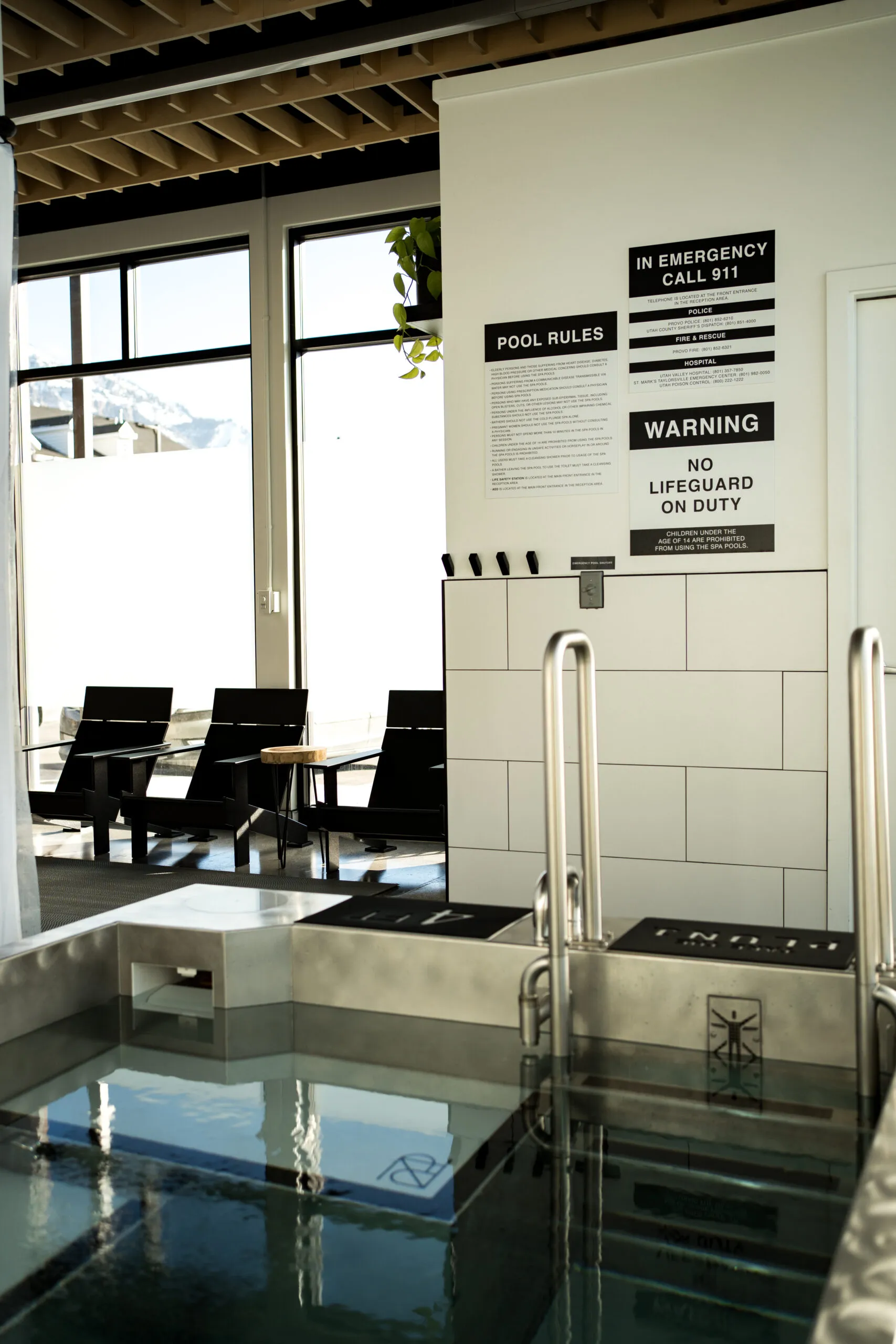
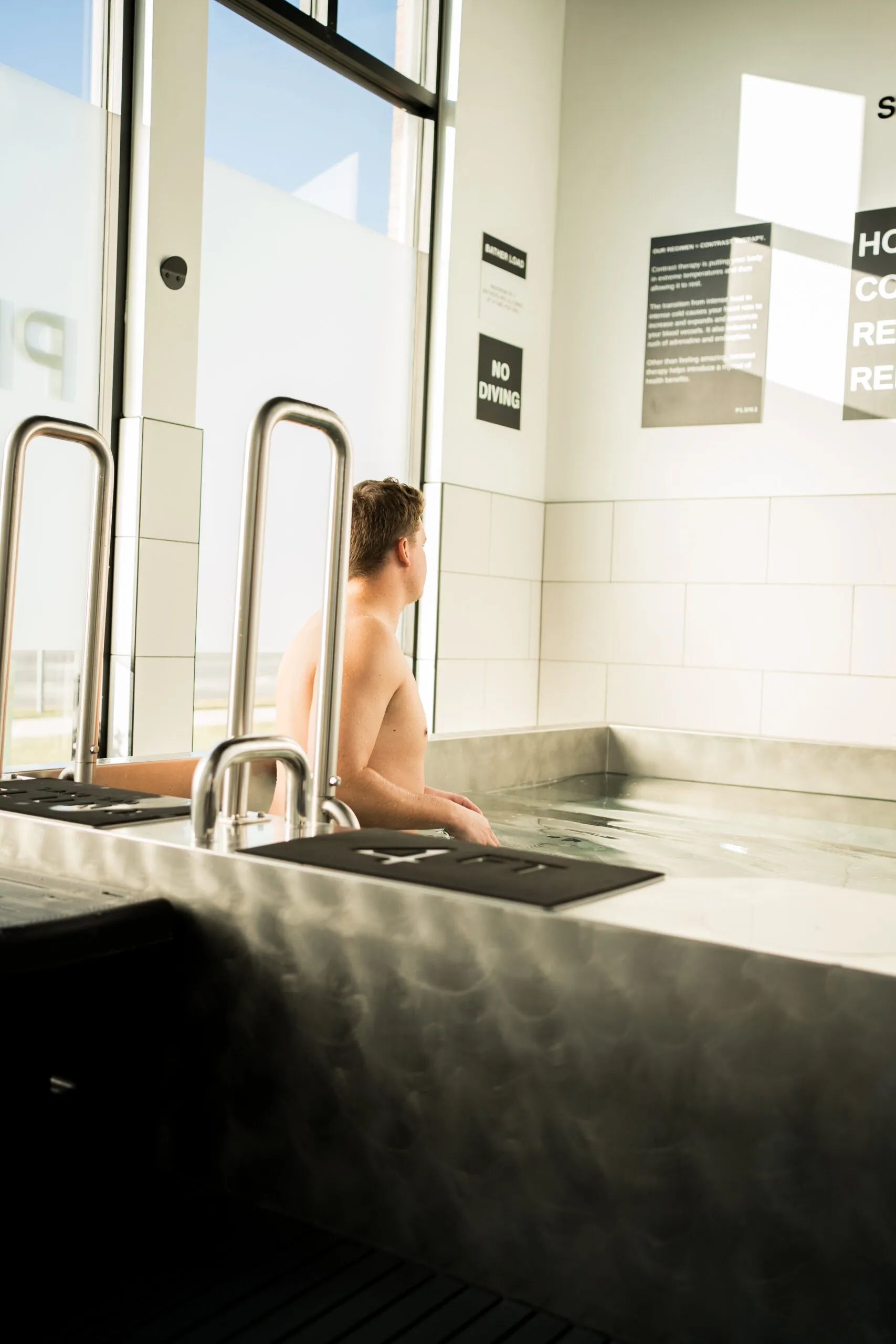
Most cold plunges run somewhere between the high 30s and mid 50s °F (roughly 4 to 13°C). A typical studio plunge is held in the 40s to low 50s. For example, the plunge at our Logan studio is maintained between 45 and 50°F.
For beginners, the range worth starting in is warmer: 50 to 59°F (10 to 15°C). That's the range Cleveland Clinic suggests for newcomers, along with a firm floor of 40°F (4°C) that it advises not going below.
Temperature Ranges at a Glance
Here's a simple way to think about the zones. These are general rules of thumb built around Cleveland Clinic's guidance, not rigid cutoffs:
| Range | What it's like | Who it suits |
|---|---|---|
| 55–59°F (13–15°C) | Cool and bracing, very manageable | First-timers and anyone easing in |
| 50–55°F (10–13°C) | Cold, with a clear shock at entry | Beginners finding their footing, and regulars |
| 45–50°F (7–10°C) | Properly cold, with a sharp first minute | Experienced plungers |
| 40–45°F (4–7°C) | Very cold, and short stays only | Experienced plungers who are comfortable with the shock |
| Below 40°F (4°C) | Cleveland Clinic advises not going below this | Not recommended |
What the Research Uses
If you look at the science on cold water immersion, you'll find studies clustered in a fairly narrow, moderate band, not the extremes.
- In a meta-analysis of contrast water therapy trials, the cold water in the included studies ranged from 8 to 15°C (about 46 to 59°F), with an average of about 11°C (roughly 52°F).
- A scoping review of contrast therapy found a consensus for cold-water temperatures of 10 to 15°C (50 to 59°F), though actual protocols varied between 8 and 15°C.
- A classic physiology study had young men sit in water at different temperatures. In 14°C (about 57°F) water, noradrenaline rose by about 530% and dopamine by about 250%. That was a one-hour immersion, much longer than a typical plunge, but it shows a strong response at a temperature in the 50s.
The common thread: the research happens in the 50s and low-to-mid 40s. Nothing in it says you have to chase the coldest number to get a result.
Does Colder Mean Better?
Not necessarily. This is where the research gets interesting.
An earlier systematic review in Sports Medicine looked for the best water temperature and immersion time for managing muscle soreness and suggested that 11 to 15°C (about 52 to 59°F) for around 11 to 15 minutes gave the best results. A more recent update looked at the same question with more data. That 2023 meta-analysis in the Clinical Journal of Sport Medicine concluded that water temperature and protocol did not influence the effect of cold water immersion on muscle soreness. Immersion time did matter: shorter and medium durations produced positive outcomes, and longer immersions did not show benefits for delayed effects.
What that means in practice:
- You don't need the coldest option to get the recovery benefits that have been studied.
- A moderate temperature is a legitimate choice, not a lesser one.
- More time isn't better time. Past a certain point, a longer stay isn't adding anything.
That's good news if you're nervous about the cold. A plunge in the 50s gives you the benefits the research has examined, with a far easier first minute.
How Long to Stay at Each Temperature
Colder water means shorter time. A good rule of thumb is to make your stay shorter as the water gets colder.
- Beginners: Cleveland Clinic recommends a minute or two at first, and says no session should ever go longer than five minutes.
- Mid-50s water: 2 to 3 minutes is a comfortable target for most people once they've settled in.
- Colder water in the 40s: keep it short, often a minute or two, and listen to how your body responds.
For how this fits into a full session, see sauna first or cold plunge first, and for how often to repeat it, see how often should you cold plunge.
Why the First 30 Seconds Feel So Much Colder
If your plunge feels brutally cold at first and then gets easier, you're not imagining it. Cold water triggers an automatic reflex called the cold shock response: an accelerated heart rate, a gasp, and fast, hard-to-control breathing, typically in the first 10 to 30 seconds. Then it eases as your body adapts to the new temperature.
The same research found that this response gets smaller with repeated exposure. After a set of 3-minute immersions in 15°C water, participants showed lower heart rate and breathing responses when they were re-tested a week later.
That's the reason the water can feel colder on day one than on day ten at the same temperature. The number on the thermometer didn't change. Your body got used to it.
How to Find Your Temperature
A practical way to find the right number:
- Start in the 50 to 59°F range. Aim for the milder end on your first visits.
- Keep early sessions short. A minute or two is plenty to start.
- Build gradually. Once the shock feels manageable, try a slightly colder plunge or a little more time, but not both at once.
- Don't chase a number. If water in the 50s gives you the energy and recovery you want, there's no reason to go lower.
- Warm up first. Heat before cold makes the plunge easier to take. See the sequence in our guide to contrast therapy order.
- Breathe out slowly. Long exhales through the first 30 seconds are the most useful tool you have.
Why Temperature Control Matters
Water temperature is only useful if it's consistent. If you can't tell how cold your water is, you can't tell how much stimulus you're getting. That's one of the practical advantages of a temperature-controlled plunge over a DIY bath, which we cover in cold plunge vs. ice bath. A chiller keeps the water at a steady, known temperature from session to session.
A Note on Safety
Cleveland Clinic advises talking to your healthcare provider before cold plunging if you have heart disease, high blood pressure, diabetes, are pregnant, or have conditions such as peripheral neuropathy, poor circulation, venous stasis, or cold agglutinin disease. Get out right away if you feel dizzy, faint, or unwell, and don't mix cold exposure with alcohol.
The Bottom Line
A cold plunge typically runs from the high 30s to the mid 50s °F. If you're new, start in the 50 to 59°F range, keep sessions to a minute or two, and don't go below 40°F. The research is mostly done in the 50s, and the most recent evidence suggests going colder doesn't improve results for soreness. Find the temperature that gives you the clear, energized feeling you're after and build from there.
Find Your Temperature at PLUNJ
Every PLUNJ studio has a temperature-controlled cold plunge paired with a sauna, so you get a consistent, known temperature every time. Our team can help you pick the right starting point.
Book your session at PLUNJ and find the temperature that works for you.
Sources:
Batista, N. P., de Carvalho, F. A., Machado, A. F., Micheletti, J. K., & Pastre, C. M. (2023). What parameters influence the effect of cold-water immersion on muscle soreness? An updated systematic review and meta-analysis. Clinical Journal of Sport Medicine, 33(1), 13–25.
Bieuzen, F., Bleakley, C. M., & Costello, J. T. (2013). Contrast water therapy and exercise induced muscle damage: a systematic review and meta-analysis. PLoS ONE, 8(4), e62356.
Cleveland Clinic. Can ice baths ease my sore muscles? Cleveland Clinic Health Essentials.
Eglin, C. M., Butt, G., Howden, S., Nash, T., & Costello, J. (2015). Rapid habituation of the cold shock response. Extreme Physiology & Medicine.
Greenhalgh, O., Alexander, J., Richards, J., Selfe, J., & McCarthy, C. (2021). The use of contrast therapy in soft tissue injury management and post-exercise recovery: a scoping review. Physical Therapy Reviews, 26(1), 64–72.
Machado, A. F., Ferreira, P. H., Micheletti, J. K., et al. (2016). Can water temperature and immersion time influence the effect of cold water immersion on muscle soreness? A systematic review and meta-analysis. Sports Medicine, 46(4), 503–514.
Šrámek, P., Šimečková, M., Janský, L., Šavlíková, J., & Vybíral, S. (2000). Human physiological responses to immersion into water of different temperatures. European Journal of Applied Physiology, 81(5), 436–442.